The Mechanics of Paint Scratching
Automotive paint is far more fragile than most drivers realize. The outermost top layer, known as the clearcoat, is thin—frequently measuring only 35 to 50 microns. Dragging a standard sponge or industrial nylon automatic brush across this layer traps road grit between the brush and paint, slicing tiny valleys into the clearcoat. When sunlight hits these valleys, they reflect light haphazardly, creating "swirl marks" that make paint look dull and grey.
Did you know?
A single pass through an aggressive automatic roller-brush car wash can introduce thousands of micro-abrasions that significantly reduce clearcoat reflection and gloss index values.
Our Clean-Bay Protocol
To prevent wash-induced damage, we follow a strict multi-step physical and chemical wash routine designed to neutralize and float away particles before any physical contact is made with the vehicle panels.
1. Cool-Down and Pre-Rinse
We do not wash hot vehicles. Panels exposed to direct sunlight or warm engines can dry cleaning agents too quickly, leaving spots. We rinse the vehicle with cold, high-volume water first to clear away mud clumps and cool down brake components.
2. Chemical Decontamination (Snow Foam)
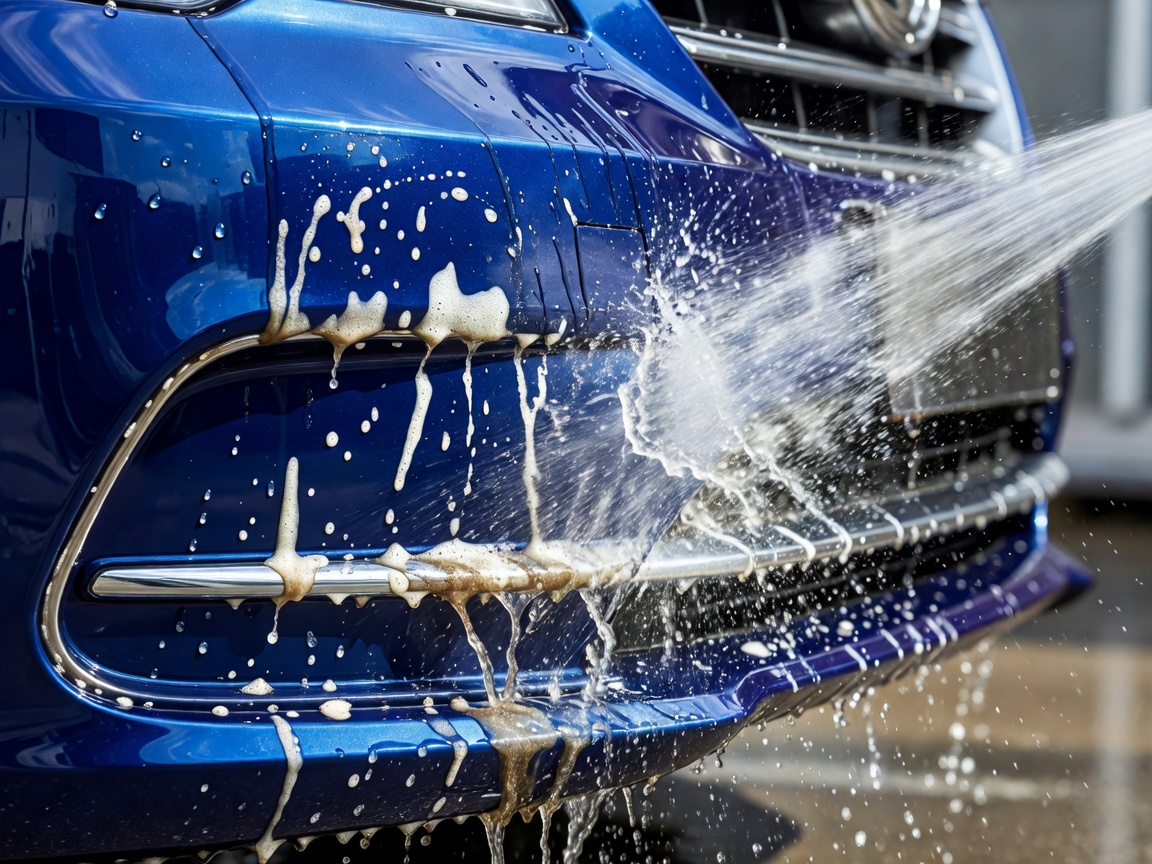
We apply a thick blanket of high-foaming pre-wash agent. This foam is formulated to cling to vertical panels, slowly encapsulating traffic films, diesel particulate residues, and salt. After several minutes, this layer is rinsed thoroughly, taking up to 80% of loose paint contaminants with it.
3. The Grit-Guard Two-Bucket Process
For the remaining surface film, we use two separate buckets equipped with physical grit-guard grates at the bottom. One bucket contains pH-neutral lubricant soap; the other contains clean water to rinse the mitt. Each stroke uses a clean microfibre mitt. Dirty mitts are rinsed in the clean-water bucket first to drop trapped grit below the guard before taking fresh soap. This keeps the wash water clean.
4. Wheel Arches and Brake Care
Brake dust consists of red-hot carbon particles and metallic flakes that burn directly into wheel lacquers. We treat wheels and inner arches separately, using distinct brushes and gentle pH-neutral fall-out dissolvers to prevent transferring brake dust onto paint panels.
5. Non-Contact Drying
Wiping panels with old leather chamois is a common cause of paint scratches. We use high-filtration warm air dryers to push trapped water out of grilles, mirrors, badges, and panel seams. Any remaining moisture is gently dapped using heavy-density microfiber towels.