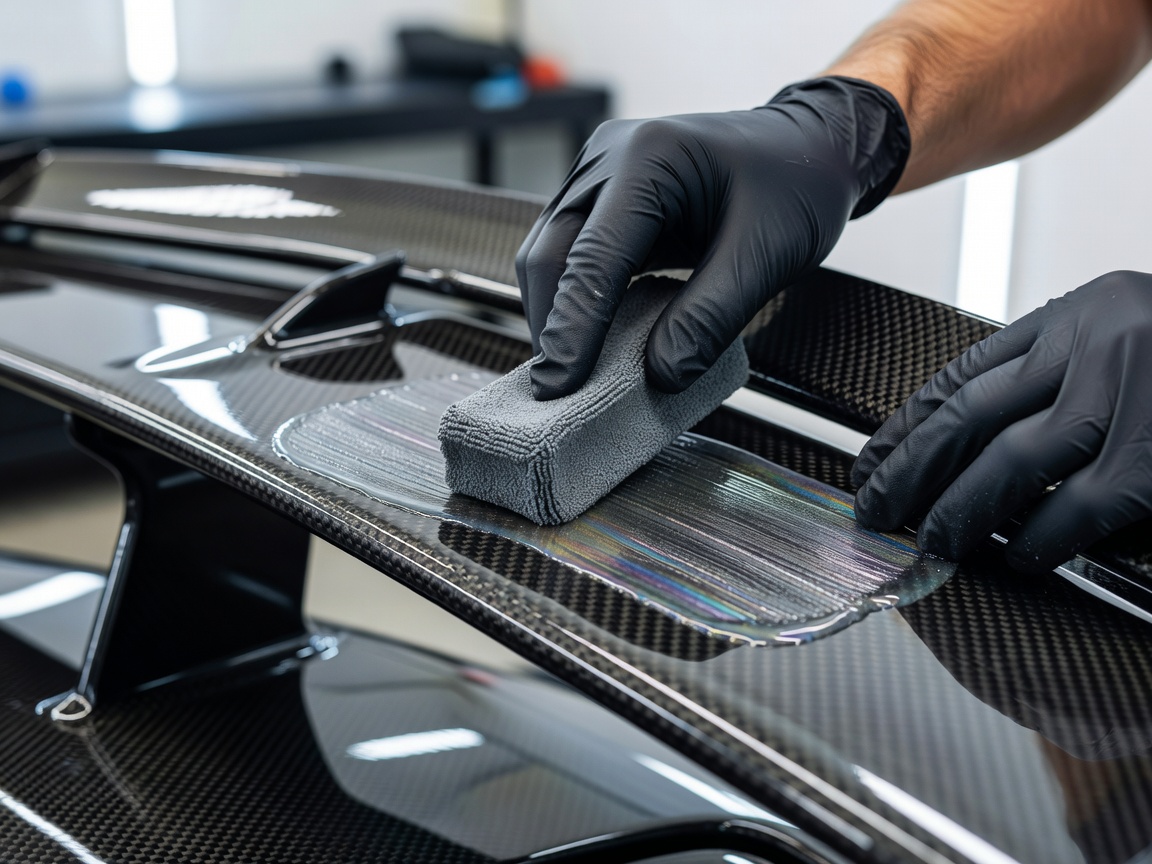
What is Ceramic Coating?
Unlike traditional carnauba waxes that sit on top of the paint as a temporary layer, modern ceramic coatings are made of liquid silicon dioxide (SiO2) or silicon carbide (SiC). When applied, this liquid chemically bonds with the clearcoat, curing into a thin, glass-like layer that helps protect the paint from environmental contaminants.
How Ceramic Protection Can Help
A properly applied ceramic coating provides several practical benefits for vehicles driven in the UK:
- Hydrophobic Performance: Water beads up and sheets off the panels quickly, carrying loose road dirt and grime with it.
- Ease of Maintenance: Traffic film and dirt cannot stick as easily, making regular maintenance washes much quicker and easier.
- Chemical Protection: Helps prevent organic acids (like bird droppings and tree sap) from etching the paint immediately, giving you more time to wash them off safely.
Setting Realistic Expectations
There are many myths about ceramic coatings. We believe in being transparent with our clients:
- They are not bulletproof: Ceramic coatings will not prevent stone chips, key scratches, or deep physical gouges.
- They are not "permanent": No coating lasts forever. Real-world durability depends on physical wear, weather exposure, annual mileage, and wash routines. A typical coating will last between 1 and 3 years.
- They are not maintenance-free: You still need to wash your car regularly. Neglecting dirty panels will clog the coating's microscopic structures, neutralizing its hydrophobic properties.
The Importance of Preparation
Applying a ceramic coating to unpolished or dirty paint is counterproductive. The coating will trap micro-swirls, road oils, and fallout underneath, and it won't bond properly to the clearcoat. This causes the coating to fail much sooner than expected.
To ensure a strong, durable bond, we require a multi-stage wash, chemical decontamination, and clay bar treatment before applying any ceramic or sealant protection.